

AquaZen
Bacopa salzmannii Purple
Bacopa salzmannii Purple
Couldn't load pickup availability
Bacopa salzmannii ‘Purple’ Care Guide
Common Name: Bacopa Purple
Difficulty Level: Moderate
Family: Plantaginaceae
General Description:
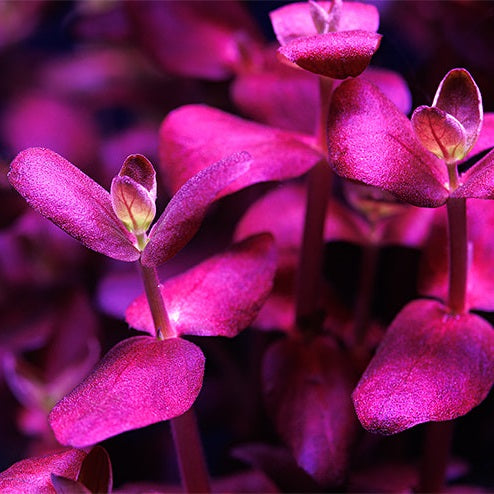
Bacopa salzmannii ‘Purple’ is a highly decorative stem plant valued for its unique purple to pinkish-red coloration, especially on the undersides of its leaves and stems. When grown under strong lighting and nutrient-rich conditions, it develops vibrant hues that add a striking accent to planted aquariums. Its upright growth and relatively thick stems make it well suited for midground to background placement in colorful aquascapes.
Care Requirements:
1. Tank Size:
Minimum Tank Size: 10 gallons (38 liters)
2. Lighting Requirements:
Lighting: Moderate to High
Higher light levels are essential to maintain strong purple coloration. Under lower light, the plant tends to appear greener.
3. CO₂ Requirements:
CO₂: Recommended
Can grow without CO₂, but supplementation greatly improves coloration, growth speed, and leaf density.
4. Water Parameters:
Temperature: 22–28°C (72–82°F)
pH: 6.0–7.5
Hardness: Soft to moderately hard
5. Substrate:
Substrate Type: Nutrient-rich preferred
While it absorbs nutrients from the water column, a fertile substrate supports stronger root development and overall health.
6. Fertilization:
Nutrients: Moderate to High
Requires consistent macro- and micronutrients. Iron plays an important role in enhancing purple and reddish tones.
7. Maintenance:
Growth Rate: Moderate
Regular trimming encourages compact growth and prevents stems from becoming leggy.
8. Propagation:
Propagation Method: Stem cuttings
Cut healthy stems and replant them directly into the substrate; they root easily.
9. Placement in Tank:
Placement: Midground to Background
Ideal for adding color contrast and vertical structure in planted aquariums.
Summary:
Bacopa salzmannii ‘Purple’ is an eye-catching plant that rewards attentive care with rich purple hues and healthy, upright growth. With strong lighting, stable CO₂, and consistent fertilization, it becomes a standout feature in colorful aquascapes. Best suited for aquarists with some experience.